
By: Adam Zivo
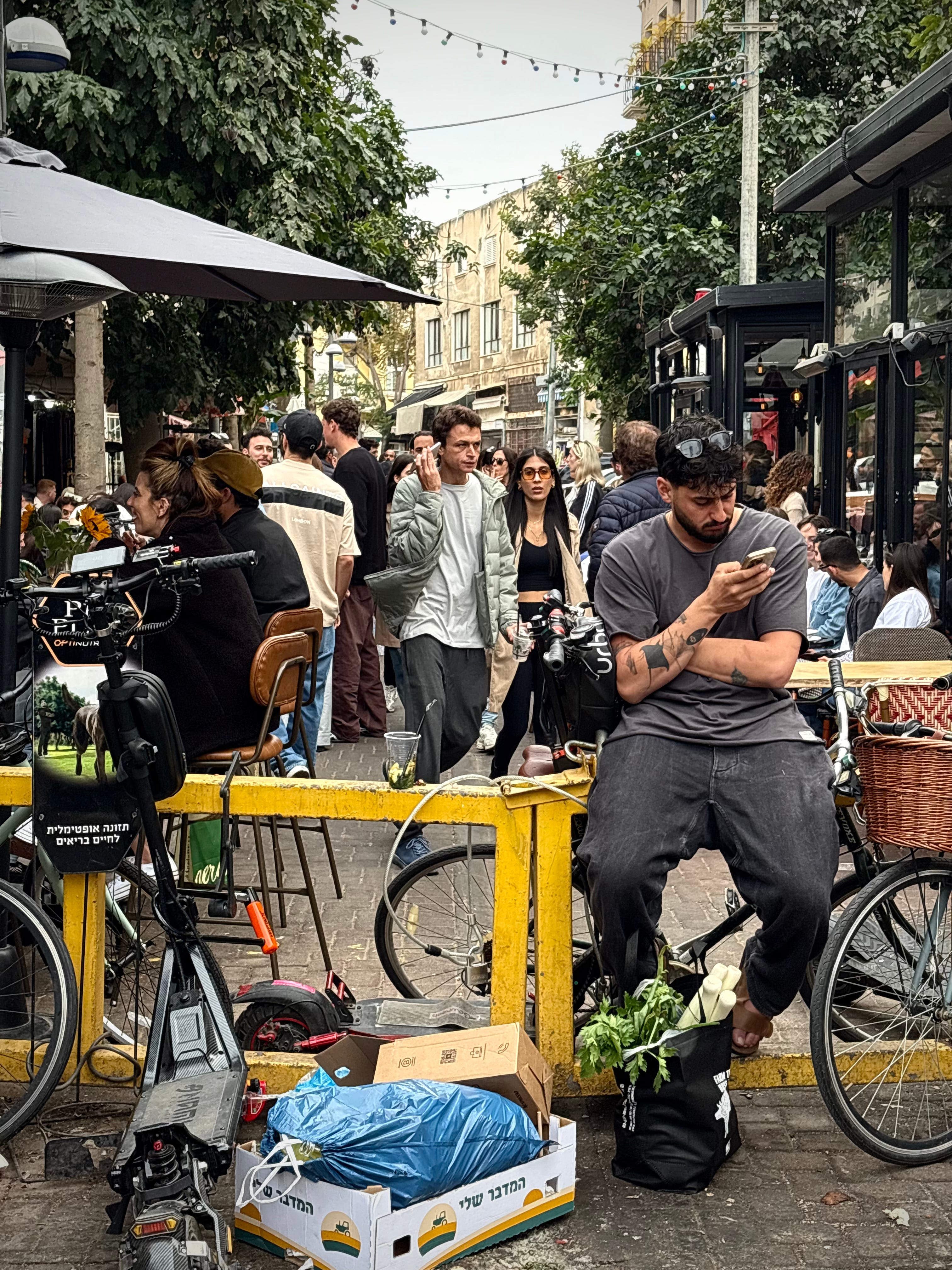
“The war with Iran is going to be brutal,” warned a fellow journalist last month. We were sitting with another colleague at a bohemian bar nestled in one of Tel Aviv’s pedestrianized streets, and amid the heaving, intoxicated crowds, a foreboding mood hung over us. As these seasoned war correspondents punctuated their witticisms with solemn predictions, I imagined my beer glass shattering and the earth tumbling over us.
I’d just landed in the city earlier that day on behalf of The News Forum, abruptly booking a flight once the signs of coming unrest had grown indisputable: evacuations, troop movements, equipment transfers, embassy rumblings. Yet, despite the sense of inevitability, no one was sure when the pandemonium would begin. A few days? Weeks? It was a point of endless debate and speculation.
“If they’re going down, it’s gonna be in a blaze of glory… I’m fucking terrified” texted a political contact during my overnight flight to Vienna. I read her messages several times in the darkened cabin, unexpectedly nauseated. “Don’t mean to freak you out but this is next level,” she continued, inviting me to stay at her place in the south, far away from the expected strike zones. The connecting flight to Tel Aviv was nearly empty.
Yet, in the week before the war, city life continued normally. The cafes and bars were full. The seaside promenade brimmed with joggers, children, and entwined couples.
Most of the Israelis I spoke with were laissez-faire about the impending war. Years of missile strikes — from Hamas, Hezbollah, the Houthis, and now the Islamic Regime — had inoculated them against panic.
“We’re ready, obviously. It’s not going to be fun, but I think it’s what has to be done. We need to have a regime change. We need to have our safety,” said a young man in a white sweater, surrounded by his friends. When asked if he was anxious about the prospect of incoming ballistic missiles, he shrugged: “We’ve had it before. It’s not the first time, so not too much. Obviously, it won’t be fun, but, again, we’ve had it before. It’s not something we haven’t seen.”
I had witnessed this same stoicism during the previous summer’s 12-Day War. The sirens had blared incessantly, yet, in the bomb shelters and on the streets outside, Israelis refused to indulge in panic or despair — even when the occasional ballistic missile punctured through the air defences and left small spheres of devastation. When one exploded by Allenby Street, near the beach, residents surveyed the damage, swept up the broken glass, and trudged on. My favourite cafe reopened within a day and simply took orders through its blown-out windows.
That war had not been terrible. The low civilian casualties – 32 individuals – was miraculous, considering that Israeli officials had predicted thousands of deaths. Few had expected that the Islamic Regime would be crippled so fully and swiftly.
Yet, passing by the now-old impact site this year, I saw that, though the crater had been filled in and repaved, the adjacent, half-collapsed lowrises had been left in ruin, cordoned off by a metal fence.
I went to Dizengoff Square, a short walk away, to meet Zina Rakhamilova, a Canadian-Israeli journalist. The central fountain there functioned as a memorial for the victims of Oct. 7. Its ledge was blanketed with framed, sun-faded photos: men and women stacked over one another by the murmuring water, kept company by long-extinguished candles and curious passersby.
Zina and I grabbed coffee and sat in the colourful Muskoka chairs sprinkled throughout the area. “So there’s a lot of people who might be so scared to enter Israel because it’s an active war zone, and don’t understand that you can, quite frankly, live your life here uninterrupted, but at the same time, a lot of people will weaponize that to minimize the suffering or minimize the challenges that we’re going to have to endure.” she said.
She cited the devastation that had been caused by the Allenby strike, and explained that the recent weeks of uncertainty made long-term plans impossible. “Of course, war and the looming threat of war is 100 per cent affecting all of our lives,” she said. “We know it’s going to be an uncomfortable couple of weeks, potentially… we know it’s going to be a lot of sleepless nights. It is going to be scary.”
Would it be worse than last summer? Maybe. Who knew? At Shabbat dinner a few nights later, I confessed to Zina, after several glasses of wine, that I had developed an unhealthy, and rather unreasonable, fear of being buried alive. She told me not to worry.
The next morning, at 8 a.m., phones were screeching as air sirens blared. I packed my backpack and walked to the nearby garage. A line of people calmly descended the staircase, checking their phones. Orderly as ants. And then, after a few minutes, everyone realized that, although Israel had preemptively attacked Iran, there was no retaliatory strike yet. So they left. No point in waiting around.
Many people left the city that morning to stay with family in the south and north, in unimportant areas immunized from bombing by sheer irrelevance. Some of them could be spotted in the near-empty streets, hauling their luggage. The hip cafes in my neighbourhood remained lively, though.
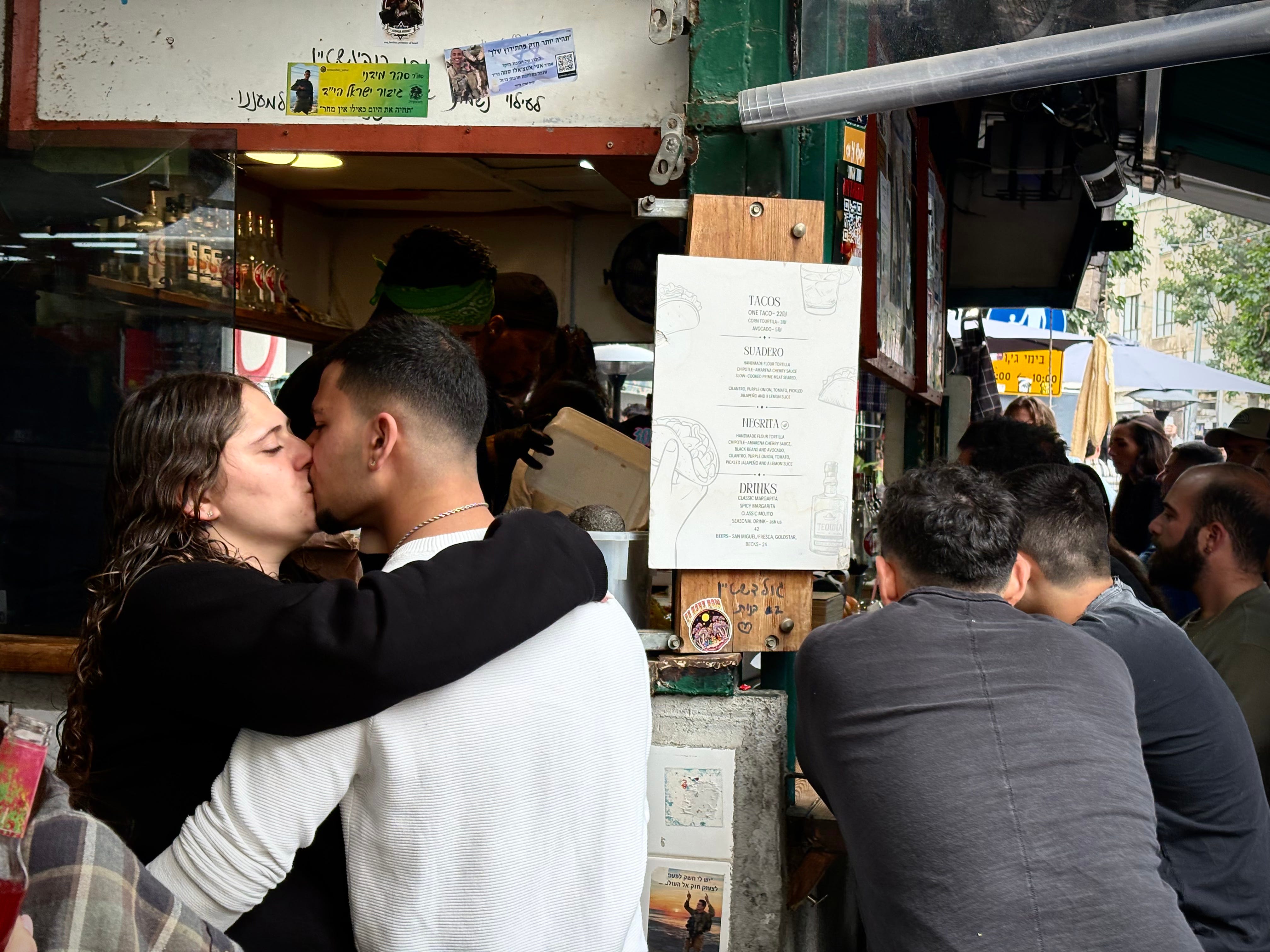
BUZZ. A chorus of angry phones. HOME FRONT COMMAND SAYS GO NEAR A SAFE PLACE. Pre-warning. Probably 5-10 minutes until the actual air siren blares, and then, at that point, 90 seconds to get inside. Okay, whatever. The usual protocol. Same as last year. Everyone descended into the shelters — walking, or a light jog at most. Deep underground, mothers played with their children, men sat on the dusty floor, and most people, pressed together with hardly any cellular data, compulsively refreshed their phones for updates.
It went on like that all day. Four times. Five. Fifteen. Into the shelter, then out. Inoutinoutinoutinout. The Islamic Regime was determined to make the Israelis get their daily steps in. Good cardio on a beautiful, sunny day.
That night, unable to get to my usual shelter on time, I ran into an unknown building and found, at the bottom of the stairwell, a Persian-Jewish woman named Mona. Her family had fled Iran in the 1980s, and she said that she cried with joy after learning that the Islamic Regime’s Supreme Leader, Ali Khamenei, had been killed by an American strike earlier that day.
“I can’t describe it. I was sitting with my friends and 47 years of trauma just opened my heart and all the chakras was like, open, and, like… wow, wow, wow. All of us. All of us are free,” she said, adding that every Persian-Israeli she knew wanted to prosecute the war “all the way to the end.”
Over the next few days, Tel Aviv was not pummeled as feared. The Islamic Regime’s leaders were, once again, killed with righteous efficiency.
There was one major hit in the city on the first night of the war. It wrecked some low-rise apartments, reducing them to sagging concrete skeletons. Yet, aside from that, the Iron Dome generally held and the destruction was relatively minor, amounting to only a fraction of the already-modest damage witnessed the previous summer.
Within a few days, the volume of Iranian missile attacks decreased by roughly 90 per cent and emergency restrictions were eased so that Israelis could return to in-person work. When the air sirens blared, residents simply retreated to their shelters for 10-15 minutes and resumed their day, unperturbed.
There were some miserable nights when the alarms rang frequently, prompting zombified processions to the underground, followed by bleary-eyed mornings. As schools have remained closed, some blue-collar workers have also struggled to find childcare options while returning to work. On the whole, though, these inconveniences, though significant in their own ways, have been trivial compared to the mass death and destruction that could have been. Tehran promised cataclysm, after all.
The Islamic Regime has, so far, managed to launch less than half the number of the missiles and drones it used during the 12-Day War. Yet, to overcome Israeli air defences, it has been launching cluster munitions that scatter many smaller warheads over a large area, and whose use against civilians is generally considered a war crime. These bomblets are harder to intercept, but they are also too weak to penetrate Israeli bomb shelters, so it would appear that their danger primarily lies in flashy property damage — and injuring those who are too elderly, disabled, unlucky or reckless to hide in the shelters — rather than mass casualties.
Having abjectly failed to achieve their real world goals, the Mullahs and their supporters have launched massive disinformation campaigns claiming that Tel Aviv has, in fact, been devastated or destroyed. Social media has been flooded with AI videos purportedly showing the city in ruin, or being struck by hellish barrages of missiles. Old footage, featuring the two main hits during the 12-Day War, has been endlessly recycled and misrepresented as evidence of new destruction, as have photos of unrelated conflicts. The descent into self-delusion is a bit sad, really.
Last week, Hezbollah and Iran launched a coordinated strike against northern Israel, with around 200 rockets sent from southern Lebanon. The attack was very loud for the residents there, but it failed to inflict meaningful damage.
I slept in my clothes that night, having been warned by a contact that things could be rough in Tel Aviv. Just after midnight, the air sirens blared without a pre-alarm — just 90 seconds to seek safety. I jumped out of bed and ran to the shelter in a neighbouring building, hearing the whoosh of the Iron Dome activating. Everyone waited. 15 minutes. All clear. Back to bed.
The next morning at the cafe, people were tired but typed away while soulful 1970s tunes played in the background.
The Line is entirely reader and advertiser funded — no federal subsidy for us! If you value our work, have already subscribed, and still worry about what will happen when the conventional media finishes collapsing, please make a donation today. Please note: a donation is not a subscription, and will not grant access to paywalled content. It’s just a way of thanking us for what we do. If you’re looking to subscribe and get full access, it’s that other blue button!

The Line is Canada’s last, best hope for irreverent commentary. We reject bullshit. We love lively writing. Please consider supporting us by subscribing. Please follow us on social media! Facebook x 2: On The Line Podcast here, and The Line Podcast here. Instagram. Also: TikTok. BlueSky. LinkedIn. Matt’s Twitter. The Line’s Twitter.Jen’s Twitter. Contact us by email: lineeditor@protonmail.com
Another great job from Canada's best reporter. I truly hope Israelis can one day live confidently in safety and peace.
Thank you to Adam Zivo and to The Line for putting this first person account out there.
Reality, however uncomfortable and unfamiliar to western eyes, is certainly welcome in this age of rampant propagandized AI-aided slop.
Yet another reason of many that ensures my subscription will continue.