

By: Ariella Kimmel
History has a peculiar sense of timing. On Monday evening of last week, Jews from around the world gathered to begin the celebration of Purim, while the war against the Islamic Republic of Iran continued to rage.
Taking place in ancient Persia, the Book of Esther tells the story of Haman, a powerful advisor to the king, who plots the annihilation of the Jewish people in the region. Because of Queen Esther’s bravery, revealing to the king that she herself is Jewish and pleading with him to save her people, the Jewish community of Ancient Persia is saved. Purim is one of the most joyous Jewish holidays and follows the adage, “they tried to kill us, they failed, let’s eat!” Purim celebrates courage, moral clarity, and the bravery to take decisive action.
Ancient Persia is obviously not today’s Iran, but the echo of history is undeniable. Today, the Islamic Republic of Iran is not a mythic antagonist but a real theocratic regime wielding real power, with strong influence across the Middle East and, increasingly, Western democracies, including Canada. As conflict involving Iran escalates, Canadians may be tempted to see it as distant or abstract. That would be a mistake.
If Canada believes in the rule of law, in the protection of civilians, and in defending its own citizens from state-sponsored violence, then it cannot remain neutral in the face of a regime that has demonstrated contempt for all three. Iran has already demonstrated that its actions can reach our citizens with devastating consequences.
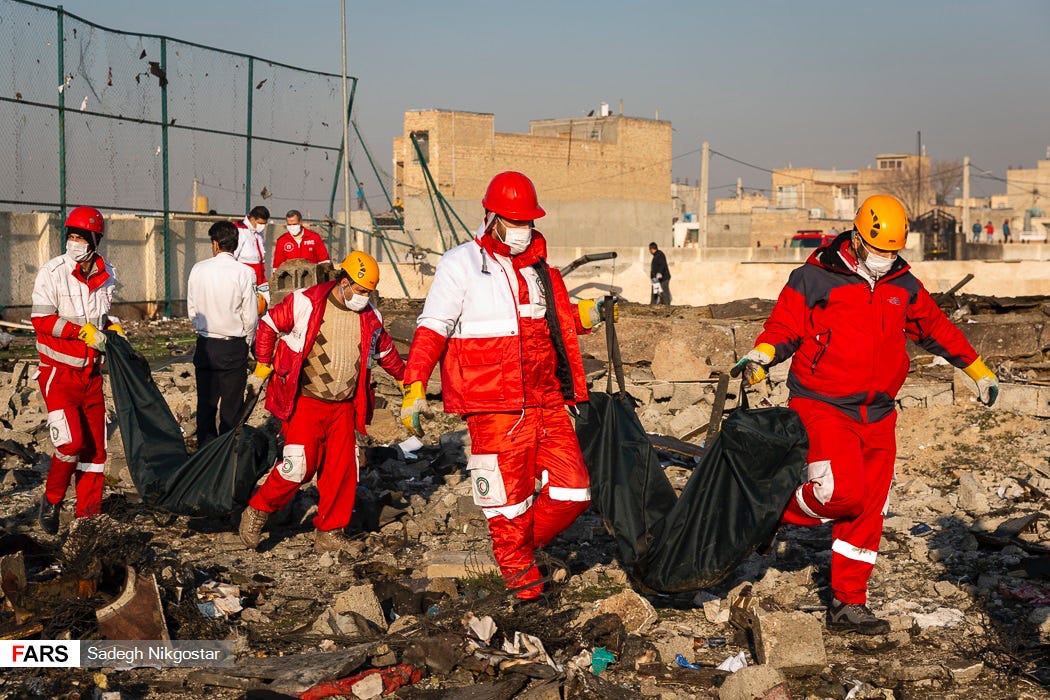
On the morning of Jan. 8, 2020, Ukraine International Airlines Flight PS752 was shot down shortly after takeoff from Tehran. All 176 people on board were killed, including 55 Canadian citizens and 30 permanent residents. Families across the country, in Toronto, Edmonton, Vancouver, and beyond, were shattered. The Iranian government initially denied responsibility, but days later admitted that its forces had fired the missiles. Subsequent legal proceedings in Canada concluded that the downing constituted an intentional act of terrorism. For the victims’ families, the search for accountability continues in international forums, including the International Civil Aviation Organization and the International Court of Justice. Justice has been slow and incomplete.
Canadians have also been the victims of the Iranian regime’s proxies, Hamas and Hezbollah, including in suicide bombings in Israel throughout the second Intifada. Courts in Canada have found the Iranian government responsible for training and financially supporting both Hamas and Hezbollah, enabling victims’ families to hold Tehran liable in civil suits. While these attacks were carried out by regime-backed groups rather than by Iranian forces themselves, Iran’s financial, logistical, and political support is considered a key enabling factor in the violence. CSIS has publicly acknowledged Iran-linked threats within Canada, including disrupting potentially lethal attacks, suggesting credible plans to harm critics of Tehran residing here were disrupted before they could be carried out.
It is precisely these brutal intersections between state policy and civilian death that transform what seems like a distant conflict into a matter of domestic concern. This is why the current war against Iran is not merely a matter of foreign policy analysis; there is a real need for Canadians to understand the tangible threat of a regime willing to shoot down a civilian airliner, in an act that very clearly demonstrates a profound disregard for human life and for the rules that underpin global order.
This is where we loop back to the story of Purim. In that ancient story, the villain’s downfall came not merely from divine providence but from the courage of those who refused to accept tyranny. In the biblical narrative, the turning point came when individuals were willing to speak, to act, and to accept risk in defence of life.
We can reduce the lessons of the past to ritual, words recited once a year in synagogue, safely contained by tradition, or we can confront what they demand of us now. The warning is not abstract. Power without constraint does not moderate itself or grow kinder over time; it expands until it is stopped. When tyrannical regimes learn that the world will tolerate repression, they deepen it, and when they discover that civilian lives can be extinguished without any accountability, as with the Canadians killed on Flight PS752, they act again, and inevitably, while democracies avert their eyes, the cost is eventually paid at home.
Supporting efforts to constrain and dismantle the machinery of repression in Tehran is not warmongering; it is deterrence and solidarity with the Iranian people who have risked their lives for freedom. And it is a declaration that Canadian lives are not expendable.
Ariella Kimmel is President of Winston Wilmont, a public affairs firm, and a volunteer within the Jewish community.
The Line is entirely reader and advertiser funded — no federal subsidy for us! If you value our work, have already subscribed, and still worry about what will happen when the conventional media finishes collapsing, please make a donation today. Please note: a donation is not a subscription, and will not grant access to paywalled content. It’s just a way of thanking us for what we do. If you’re looking to subscribe and get full access, it’s that other blue button!

The Line is Canada’s last, best hope for irreverent commentary. We reject bullshit. We love lively writing. Please consider supporting us by subscribing. Please follow us on social media! Facebook x 2: On The Line Podcast here, and The Line Podcast here. Instagram. Also: TikTok. BlueSky. LinkedIn. Matt’s Twitter. The Line’s Twitter. Jen’s Twitter. Contact us by email: lineeditor@protonmail.com.
The only thing we can do about Iran is kick out IRGC and other Iranian government agents from Canada. We should do that - and yet we can't seem to manage even this trivial exercise of state power. On the war itself, we are impotent. Pontificating about it is merely embarrassing.
I think this should be required reading for carney and his liberal party along with all opposition parties.