

By: Jen Gerson
Those who listened to our podcast last week will know that I may have stumbled upon a Grand Theory of U.S.-Canada relations that is both hilarious and extremely uncomfortable for every party involved.
It all came about last week when Simon & Schuster Canada announced the forthcoming publication of former deputy prime minister Chrystia Freeland’s book Unreliable Boyfriend: An Insider’s View of Dealing with a Chaotic Superpower, Plutocrats, and Other Complicated People. The title referred to a remark Freeland made on U.S. TV host Bill Maher’s show, in which he referred to the U.S. as an “Unreliable Boyfriend.”
Unreliable Boyfriend.
Unreliable Boyfriend.
Let those words sink in for just a minute. I did. And the deeper they sank, the more they began to unlock doors in my brain that I did not actually want to know were there. But now I know.
And now you must know them, too. I’m sorry.
Remember when now-Prime Minister Mark Carney announced his leadership candidacy on the Jon Stewart show? Again, on American television. Politician and host instantly fell into banter in reaction to Donald Trump’s threats of annexation. On behalf of a nation, Carney rejected these overtures: “It’s us, not you, it’s us.” And everybody laughed. Because it was funny.
Why was it funny? Why is anything funny? Something is funny when it touches on something that is true but unacknowledged. Comedy is a fleeting glance at taboo.
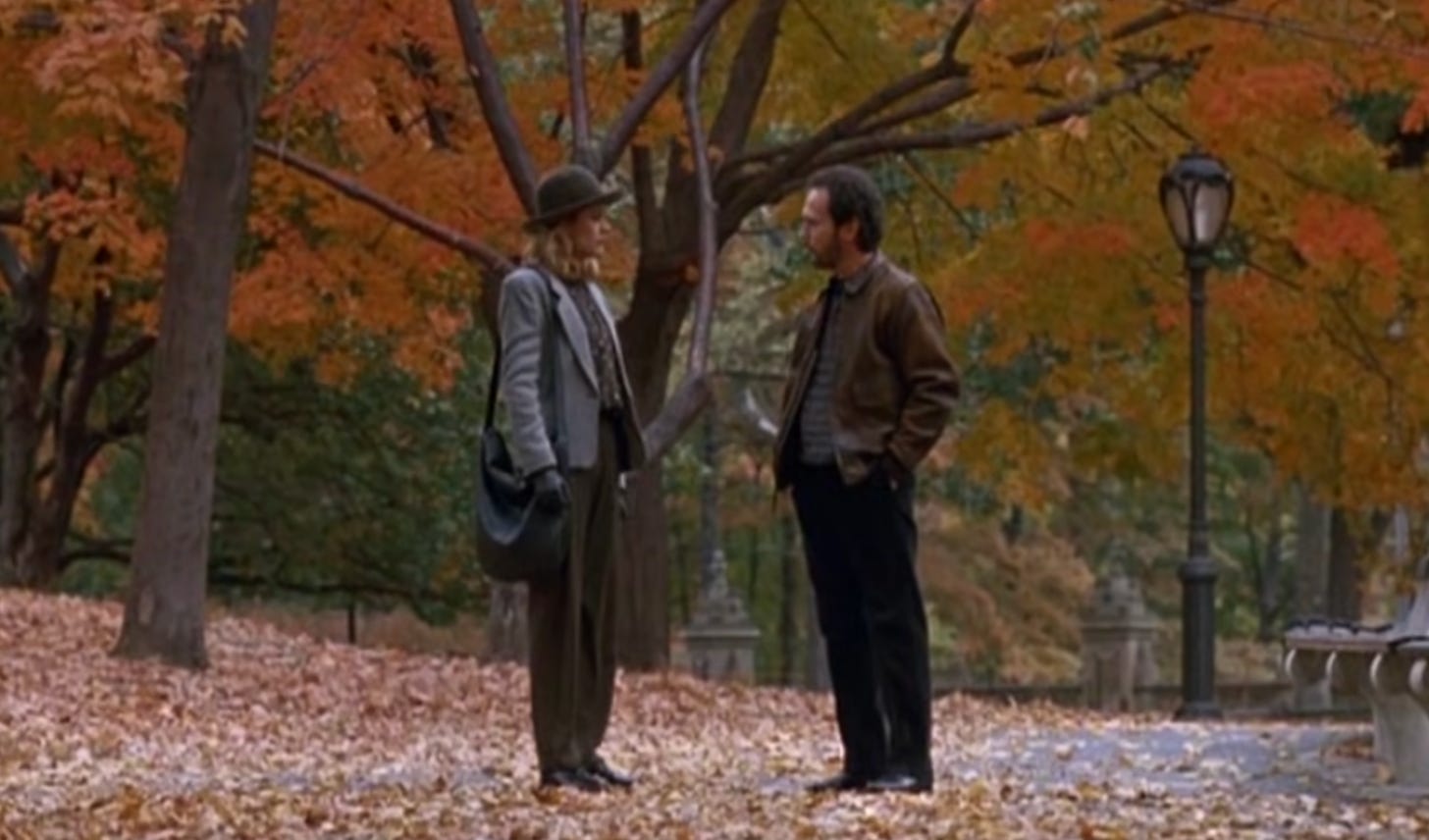
And what I’m saying here is that hell of a lot of pathological behaviour on both sides of the border of late becomes much more explicable when you start to frame it through a very specific narrative arc. Namely, through the story structure of a rom-com, a twisted meet cute with a few awkward moments of absurdity thrown in to keep it light. Two romantic leads meet, initially they don’t get along. Circumstance throws them together and, despite major obstacles, eventually, they discover they are more compatible than they initially realized. That’s the play.
Unreliable Boyfriend.
Is that not the unstated subtext of almost all of our language to describe the state of our two nations’ strained ... relations?

After I riffed on this theme too extensively on the podcast, I did a little more digging and I fully regret to inform everybody that this theme is not remotely new. There is documented evidence of our mutual horror and attraction dating back more than 150 years.
I asked ChatGPT to pull up some political cartoons on this theme and without any hesitation, it managed to find half a dozen. The idea of a failed American “seducer” — not a conqueror, mind — was so common in Canadian newspapers at the time of Confederation that it became a reliable trope for our political comedians.
Prior to 1867, these images often played on the theme of our colonies as underage daughters protected by parental Britannia. Our nation came of age during the World Wars, after which the language and imagery evolved to reflect something like a settled relationship. Language like “marriage of convenience” was common rhetorical parlance. Mutual goodwill peaked during NAFTA, at which point we were basically leaving our toothbrushes in each others’ bathrooms. Sure, sure, we kept separate bank accounts/currencies, but we were well on our way to sharing Netflix passwords.
Things got rocky in the early 2000s with Iraq, when we wanted to maintain more independence on defence. For our part, we got too cozy and complacent. We should grant that. Our years of declining military spending, matched by growing social spending suggest that the Americans weren’t wrong to be annoyed by our failure to pull our weight.
And who stumbles into the midst of all this tension in 2016, and again in 2024? Donald J. Trump. A literal rapist who put all our backs’ up by making the romantic subtext entirely too explicit with endearments like “cherished 51st State” along with outright threats of economic coercion.
Suddenly, our weaknesses and trusting relations started to make us feel much too vulnerable.
I am going to embarrass many of my Canadian readers to point out that there is a certain asymmetry in the use of romantic or familial language to describe this partnership. Some Americans have used the metaphor of a marriage to describe our alliance — most notably, John F. Kennedy who addressed Parliament in 1961 with: “Geography has made us neighbours. History has made us friends. Economics has made us partners. And necessity has made us allies. Those whom nature hath so joined together, let no man put asunder.”
However, on the whole, Americans are more likely to interpret the dynamic through the lens of money. Canadians, however, can’t avoid describing the relationship through the prism of romance.
This explains more about us than we’d like to admit.

We pretend to hate America. We define ourselves against the United States. But we pretty clearly don’t actually dislike Americans, their culture, their schools, their fashion, their warmer weather — their television shows. Oh, but we would never.
Come off it. We clearly love America. So much so, we’ve developed a neurotic inferiority complex about it. We’re flattered by their attention when we receive it, and paradoxically resentful of their insults, neglect, and crude overtures.
Why else would the 51st state stuff bug us so much? Trump gets under our skin because part of us is just a little bit intrigued by the idea. Otherwise, we’d simply laugh it off.
Instead, our response is “lady doth protest too much” Elbows Up kayfabe.
And of course it is.
We are the smaller, weaker partner, both economically and in terms of population size. Unreliable Boyfriend — at the risk of being castigated for my heteronormativity, the title even assumes the stereotypical gender roles. Canadians are the passive, the pursued. Our own national identity is too fragile to survive that pursuit. True partnership is impossible; consent is self annihilation. We’d be gobbled up and consumed. We’d become American.
Hence the brittle shell of identity protection, which so often comes off as shallow anti-Americanism. We assert ourselves in opposition to The Other.
That said, I don’t think the Americans are as indifferent to us as they like to play it, either. Sure, they may run the world and have more going on than us. The asymmetry of power and attention is real and substantial. But Americans pretend to ignore Canada more than they actually do.
I wish they forgot we existed, but I think there’s something weirdly fascinating to the American psyche about Americans who aren’t Americans. We’re familiar enough to be plausible partners, but just different enough to be intriguing.
When they do pay attention to us, we are the object of their own cultural insecurities and desires. Their left projects their own preference for more social welfare and a more just and compassionate society onto us — often minimizing the degree to which our social safety net has led to failures or trade-offs they wouldn’t accept. This is not so different from typical romantic idealization.
Meanwhile, their conservatives project their fears about their own society northwards. One doesn’t have to spend too much time on conservative American media to see a distorted reflection of Canada as a woke shithole paradise of weakness. This, too, isn’t accurate; it’s simply a dark romantic projection, and the root cause of much of the current U.S. administration’s antipathy toward us.
(I will add, here, that while Canada is reliably more progressive than the U.S., “wokeness” has always been an imported strain of American academic culture. Its intellectual frameworks are not native to Canadian political culture at all.)
They may not be as obsessed with us as we are with them, as our ambassador Mark Wiseman recently noted, but this romance isn’t all in our own heads.
I mean, Unreliable Boyfriend. Freeland really gave away the game, here. She’s not even denying that America is our boyfriend. The objection is that America is Unreliable. The fear isn’t annexation — the fear is an exploitative situationship in which Canada never gets fully invited to party with all the other states, with a voice and vote and equal representation. Why buy the cow, when you can get the oil at a discount to world oil prices?
Am I overthinking this? God, have I gone too far with this metaphor? Too late now, I guess.
Anyway, look, the terrible irony of all of this is that all America had to do to get everything it wanted was simply to be polite and gentlemanly about the arrangement. In another 40 to 60 years, the relationship would have been all but official. Instead — no — they had to slip into the populist meth and threaten to beat us and now we’re out here trying to clear out the emergency cash we stashed in the extra underwear drawer before they wake up and notice.
So now Canada is engaged in an extended and maybe pathetic flirtation with Europe and the Nordic states and reading Eat Pray Love. China may be a worse partner than America on every objective measure, but at least we know what we’re getting there. Meanwhile, we’re going to glam up and go full How Stella Got Her Groove Back on the global stage just to regain a little self respect. America may be the bigger, more powerful, sluttier nation — but don’t pretend like he didn’t notice. That Davos speech stung and we all know it.
Look, the Americans like to play it cool, but they’re not entirely succeeding. For too many centuries, we’ve been circling around one another with no clear resolution, and all that tension has to go somewhere. In this case, it’s channelled toward a long list of trade irritants that eat up more emotional and psychological weight than their actual impact on the American economy justify. Do Americans honestly care that much about supply management and softwood lumber, or whether or not our provincial liquor boards sniffily reject their whiskey? Why are they that upset about boos at a hockey game — they don’t even like hockey that much.
They’re just as messed up as we are. Donald Trump is a one-way mirror into the collective shadow of the American soul. Like all narcissists, he’s a master at identifying weakness. He’s coming back to the 51st-state threat over and over again for a reason. It pokes at something unstated about the nature of the relationship. If they didn’t care just a little, they’d forget we existed at all.
These are not the actions of rational and indifferent trade partners. This is how men behave when they resent women they desire: when they’ve lost the internal moral compass that constrains their behaviour to honourable conduct. This is “know your place” energy.
Unreliable Boyfriend, indeed.
Both Canada and America are immature. If we had grown up just a little, we’d both take a deep breath, admit we have feelings for one another. We’d decide, calmly, whether to move forward on terms of a respectable marriage, or to re-establish healthy boundaries/borders while agreeing to live entwined lives as good friends. Maybe even friends with benefits again one day, but at this point, we’d be unwise to promise anything. Burned once, it will take us time to trust again.
The Line is entirely reader and advertiser funded. No federal subsidies, no bailouts. If you value our work, please consider supporting us by subscribing or making a donation. Donations are not subscriptions and do not unlock paywalled content, but they help keep The Line independent

To contact The Line with a general inquiry or comment, please email info@readtheline.ca. For other ways to connect with us or to follow us on social media, please see our LinkTree.
Under Harper it was "Stand By Your Man."
Now it's "I Will Survive."
And I would say it will probably turn out he’s Canada’s too. After he has made his money he will leave because he clearly has a social inferiority complex. He loves foreign media but can’t be bothered with Canadian unless he has to. Remember he IS European as he claimed and he also has an Irish passport. Don’t think he won’t use it.
He’s also over 90% invested in the US of A, not Canada. Sounds rather unreliable to me.