

By: Ken Boessenkool
In December 2004 I was sitting in the Official Opposition Leader’s Office and the holder of that office, Stephen Harper, walked in. We were working on an election platform because we expected Paul Martin to spring an election quickly after Peter MacKay and Harper merged their respective parties into the Conservative Party of Canada.
“When I become prime minister,” Harper started, and I interrupted him. I said I had never heard him say anything like that since I had met him in 1994, when I was Preston Manning’s economic advisor. Harper responded, “I never thought it was possible until now.”
Why do I tell this (admittedly self-indulgent) story?
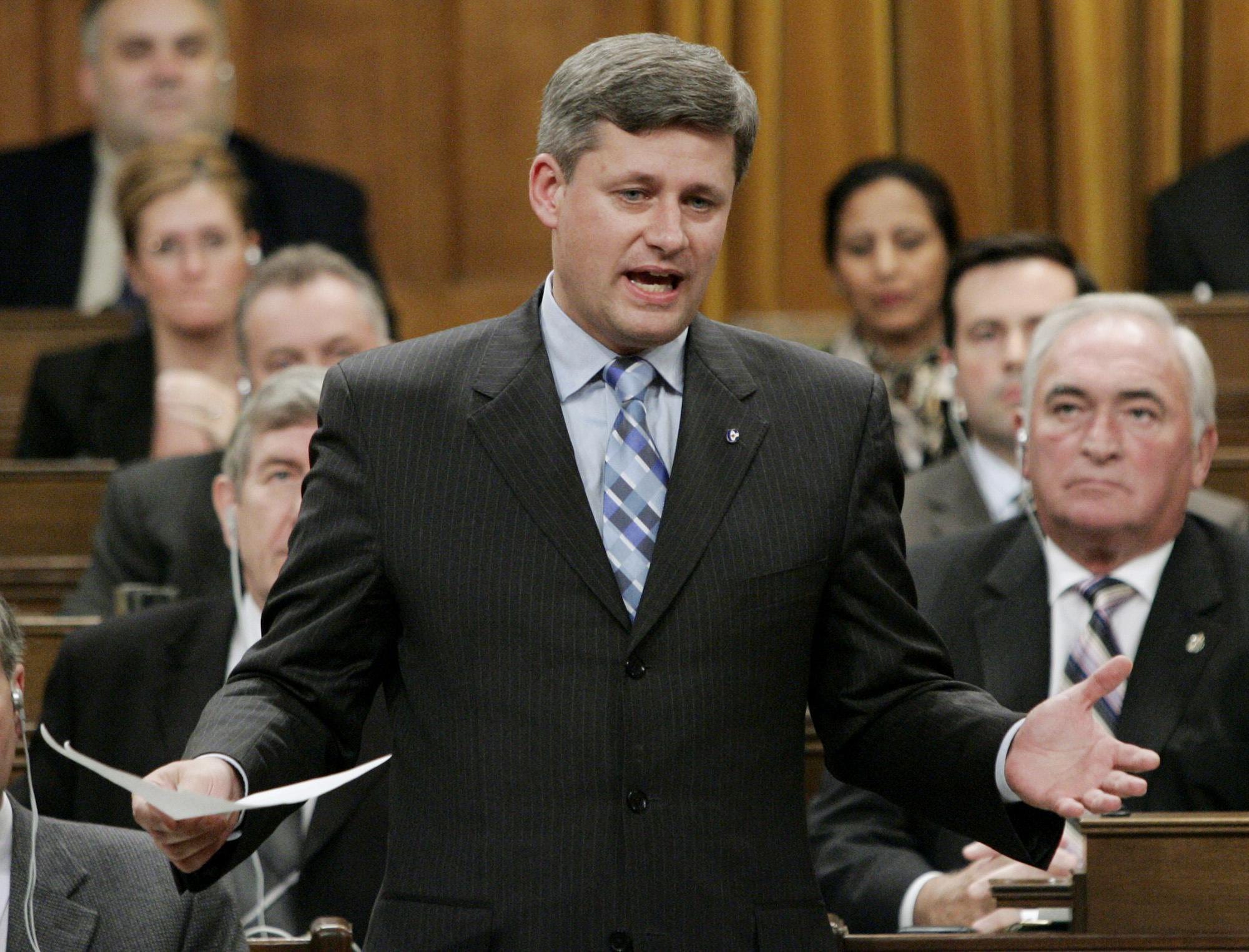
Much has been written of late about Stephen Harper’s legacy as Canada’s 22nd prime minister between 2006 and 2015. On the occasion of his 20th anniversary of becoming prime minister, most of that commentary has understandably focussed on that role.
But being prime minister for nearly a decade is not Harper’s biggest legacy. And I have a pretty good inkling that he agrees.
On the night Harper lost the 2015 election, after my daughter had sung the national anthem and Harper had bidden his adieu, he summoned me to his hotel room. We spent a few moments in private reflecting on our two decades of working together. He was of course proud of his legacy as prime minister. But his reflections that night (and in so many of our conversations over the previous 20 years) was the creation of a durable right-of-centre conservative political party that he hoped would win as many elections in the 21st century as the Liberals had won in the 20th century.
It was the creation of such a party that was at the root of his first speech to the Reform Party in Winnipeg in 1987. It was the creation of such a party that was at the root of his disagreements with Preston Manning in the mid-to-late 1990s and that underpin Tom Flanagan’s critical book Riding the Wave.
Harper didn’t want a conservative party that rode waves of public opinion into power and then washed over the shore when that party (or that opinion) was spent. He disagreed with the sunset clause Preston Manning created for the Reform Party.
In the late 1990s (I believe 1997) Manning wrote an oped in the Globe and Mail about the future of the party calling for a “democratic conservative” party. Within weeks, Harper wrote about the future of the party calling for a “conservative democratic” party. The juxtaposition of those two words by those two leaders said everything about their respective visions.
Manning wanted a party that was populist first, conservative second. Harper wanted a party that was conservative first and populist second. It was what he said in 1987. It is what he said in 1997. And it was what he said in 2003 in what I consider to be the most foundational speech of his life — a speech I helped craft. That speech to Civitas (a small gathering of Canada’s not-vast-enough right-wing conspiracy) laid the foundations for his decade in power. It laid out the governing philosophy for a conservative party of Canada, even though that party did not exist yet. (You can find distillation of that speech, Harper’s government philosophy and his achievements in office in a book-length piece written by Sean Speer and I here.)
That speech became the foundation of the party Harper and MacKay built in late 2004, was approved by massive majorities in both parties weeks before the exchange between Harper and I at the top of this essay.
In the 2011 election, the scripting unit that I led produced the first draft of all the speeches Harper would deliver in that election. Harper was a voracious editor of his own words, but I recall how pleased he was when our team handed him what became the penultimate line of every speech he gave in that election (“God Bless Canada” being the ultimate line), and which was on the lips of every Conservative in the room at that gala.
“Strong stable conservative majority government.”
A party that could do that was all he ever wanted. A party that could do that was all he ever worked on. A party that did that is what he built. And a party that continues to do that is all he wants now.
That party is his true legacy.
Ken Boessenkool is founding partner of Meredith Boessenkool & Phillips.
The Line is entirely reader and advertiser funded — no federal subsidy for us! If you value our work, have already subscribed, and still worry about what will happen when the conventional media finishes collapsing, please make a donation today. Please note: a donation is not a subscription, and will not grant access to paywalled content. It’s just a way of thanking us for what we do. If you’re looking to subscribe and get full access, it’s that other blue button!

The Line is Canada’s last, best hope for irreverent commentary. We reject bullshit. We love lively writing. Please consider supporting us by subscribing. Please follow us on social media! Facebook x 2: On The Line Podcast here, and The Line Podcast here. Instagram. Also: TikTok. BlueSky. LinkedIn. Matt’s Twitter. The Line’s Twitter.Jen’s Twitter. Contact us by email: lineeditor@protonmail.com
Makes on wonder how we as a country went from the leadership of a statesman like Harper to a foppish fool like Trudeau. What changed in the Canadian electorate or are we dominated by shallow thinking self serving quasi ideologues?
Stephen Harper had a vision for a united Canada. The current liberals have a philosophy of divide and conquer. I just wish Canadians were smart enough to know the difference and realized they're being played.