

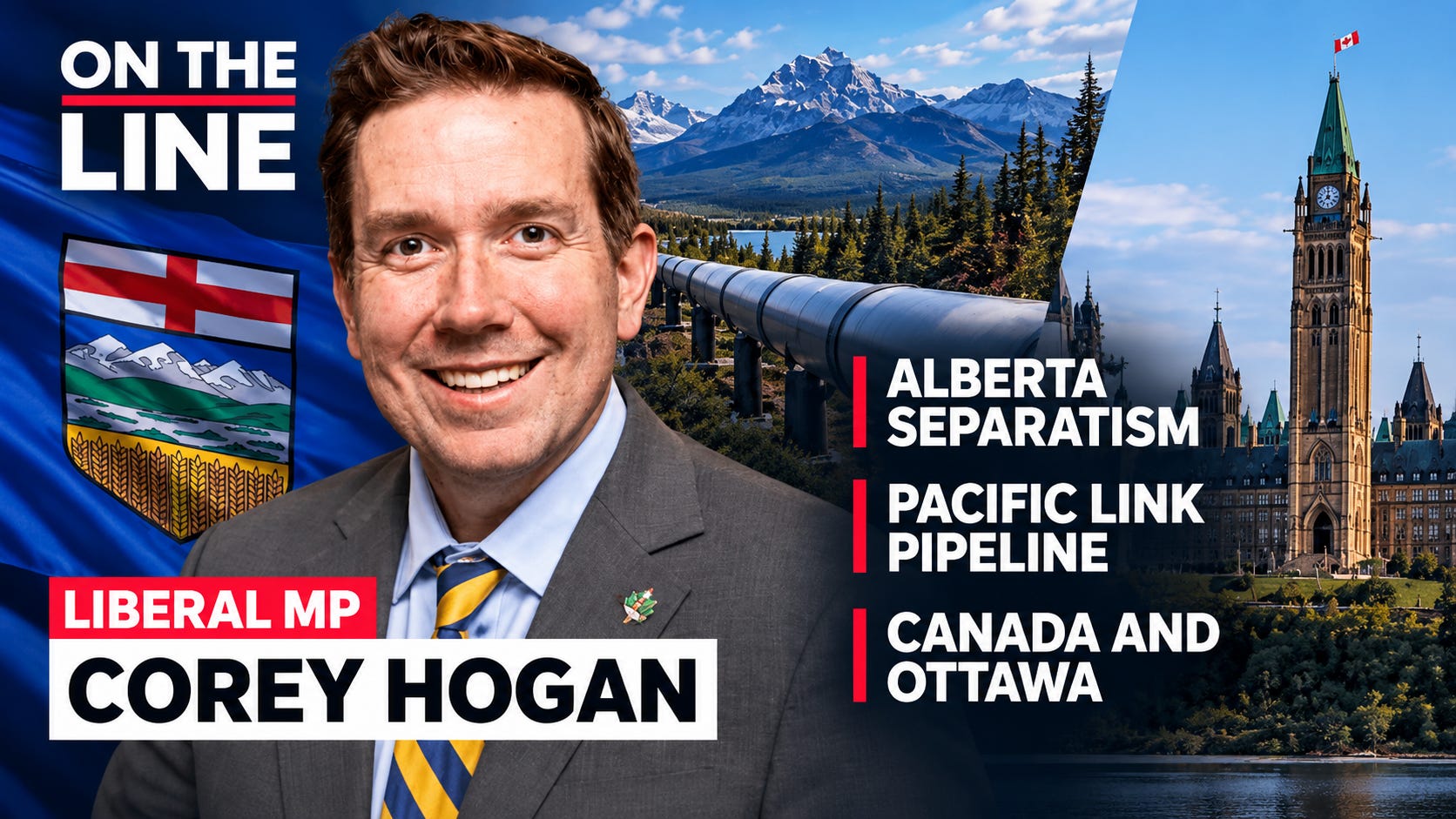
In this episode of On The Line, Jen Gerson speaks with Corey Hogan, Liberal MP for Calgary Confederation, about Alberta’s separatist referendum, the federal government’s changing approach to the province, and whether Ottawa’s newfound enthusiasm for getting major projects built represents a substantive shift or simply a change in political messaging.
This episode is brought to you by BioCanRx. We’ve been partnering with federally-funded Canadian not-for-profit BioCanRx to learn how made-in-Canada immunotherapies offer new ways to beat cancer. This month we’re addressing common questions, like: can I get immunotherapy as a first line treatment for cancer? In Canada, certain immunotherapies are available as first line treatments for specific cancers, but for the majority of cases the standard of care continues to rely on chemotherapy, radiation and surgery. Immunotherapies being developed through research supported by organizations like BioCanRx are most commonly available through clinical trials after standard of care treatment options have been exhausted. As more immunotherapies demonstrate safety and efficacy, this will continue to change, so it’s important to study the options for your specific cancer indication. Thanks to BioCanRx for their continued partnership in answering these questions. Visit BioCanRx.com to learn more.

Hogan argues that the referendum itself is only part of the story. The larger question is what happens afterward: does separatism become a durable political force that future Alberta governments have an incentive to keep alive? Or does the current crisis produce a lasting change in the relationship between Alberta and Ottawa? Jen and Hogan discuss what the federal government can realistically do to address western alienation, and where responsibility ultimately rests with Alberta’s own political leadership.
This episode is also brought to you by the Forest Products Association of Canada. Budget season in Ottawa is filled with asks for new programs, new tax measures and new investment. But for Canada’s forest products sector, the biggest opportunity for growth doesn’t require new spending — it requires smarter rules.Regulatory inefficiencies are costing the average Canadian mill an estimated one million dollars a year each. That’s money that could be reinvested in workers, communities, and modernization instead.The Forest Sector Transformation Task Force gave Ottawa a clear playbook. As the federal budget takes shape, the fastest way to unlock private investment is to remove the made-in-Canada barriers standing in the way.Learn more at FPAC.ca.
They also get into the practical obstacles facing the government’s pro-building agenda. That means pipelines, major infrastructure, consultation with First Nations, and the increasingly important question of what Indigenous consent means when governments are trying to move projects forward. Hogan explains why he believes Canada is finally becoming more serious about building things again — and what will have to change for that rhetoric to translate into actual projects.

This episode is also brought to you by Cameco. Building Canada’s energy future means creating jobs for Canadian workers. That’s why the AP1000 reactor is the right choice for Canada: it is already operating and ready to deliver the power we need. Choosing the AP1000 means a reactor built by Canadians, creating skilled jobs in construction, fabrication and the trades while keeping more investment and economic benefits here at home.If we are serious about creating Canadian jobs and strengthening our economy, the choice is clear.To learn more, visit ap1000.cameco.com.
As always, check out our main page at ReadTheLine.ca. Like and subscribe! And we’ll talk to you soon.
YouTube:
Video goes live at 7 p.m Eastern/5 Mountain.
Spotify:
Apple:
Enjoy the episode! Talk to you soon.
The Line is entirely reader and advertiser funded. No federal subsidies, no bailouts. If you value our work, please consider supporting us by subscribing or making a donation. Donations are not subscriptions and do not unlock paywalled content, but they help keep The Line independent

To contact The Line with a general inquiry or comment, please email info@readtheline.ca. For other ways to connect with us or to follow us on social media, please see our LinkTree.


