
By: Philippe Lagassé
We all know the expression “you break it, you own it.” Well, renowned norm-breaker Donald Trump doesn’t think it applies to him.
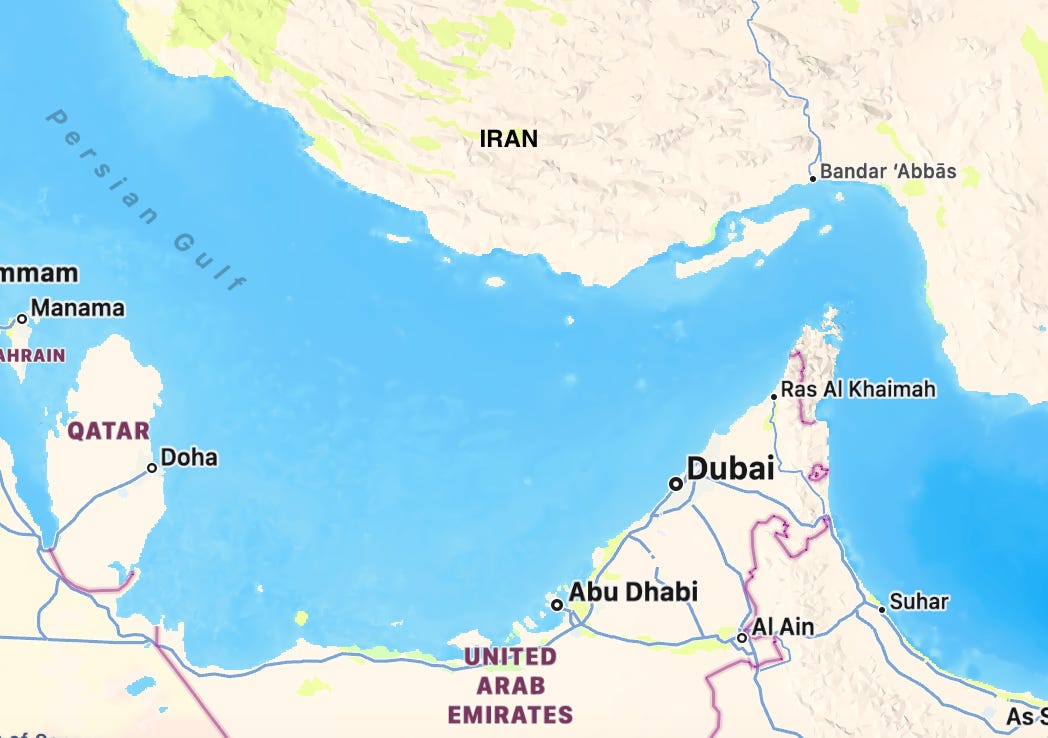
It’s now been more than a month since the United States and Israel began a massive bombing campaign against Iran. In response to these attacks, the Iranian regime has blocked the Strait of Hormuz, a critical maritime choke point connecting the Persian Gulf to the Gulf of Oman. Around 20 to 25 per cent of the world’s oil and natural gas travels through the Strait, much of it supplying countries in the Indo-Pacific. Iran’s blocking of the Strait is propelling us toward a global energy crisis, one that will wreak havoc on an already fragile world economy. Despite having started the conflict that has brought us here, Trump doesn’t think that this is America’s problem. The President believes American allies should step up and reopen the Strait, even though he didn’t consult them prior to attacking Iran — and has spent his first year in office insulting and belittling most of them.
Prime Minister Mark Carney kinda figured this would happen. Shortly after the attacks on Iran started, Carney was asked whether Canada would get involved. The Prime Minister ruled out taking part in any offensive actions, but he noted he couldn’t rule out any involvement. While pundits and the Bluesky brigades were losing their minds, claiming that Carney was opening the door to Canada joining the bombing (despite his explicitly saying otherwise), military planners in Ottawa were probably looking at a maritime assurance role. A disruption to shipping in the area was a predictable outcome of the hostilities, and Canada has a history of deploying naval forces to the region during conflict and crises, such as the Persian Gulf War and in the aftermath of 9/11.
Canada and other allies, however, aren’t committing to anything at this time, with good reason. Iran has mined the Strait and is prepared to attack ships that attempt to sail through without its permission. The Strait is a very high threat environment and there’s still an ongoing conflict. Indeed, the Strait is an especially dangerous littoral zone, since ships must contend with all sorts of threats from land, sea, and air. Even advanced warships would be vulnerable in that environment. Until there’s a ceasefire in place, which includes an agreement from Iran that it won’t attack or disrupt traffic in the Strait, allies will be loath to get involved. This likely explains why the United States doesn’t appear willing to force the Strait open itself. The risks to the United States Navy would be huge, too. So, unless Iran agrees to a ceasefire and an open Strait soon, we may not be able to avoid the economic calamity that’s about to hit us.
Let’s say a ceasefire does emerge, though. Could Canada deploy anything to the Strait to provide assurance and help clear the mines? Technically, yes. If there’s one thing to know about the Canadian Armed Forces (CAF), it’s that they almost always manage to answer the call. In fact, their ability to move mountains to provide Canada with options in a crisis is both one of their greatest strengths and weaknesses. Generations of Canadian politicians have been able to put off investing enough in the military because, hey, they still manage to show up when we need them, right?
In this instance, the Royal Canadian Navy (RCN) could manage to deploy and sustain one frigate to an allied operation in the region. If pushed, the RCN could surge and deploy two frigates for a year. Were we certain that a firm ceasefire was in place and the threat environment was sufficiently permissive, the Royal Canadian Air Force might also be able to send a CP-140 Aurora maritime patrol aircraft. And if necessary, a Mine Countermeasures team could be sent as well, which would include a small number of clearance divers.
Importantly, though, deploying these assets would involve taking them away from other operations. Sending assets to deal with the Strait would involve diverting them from the CAF’s missions in the Caribbean, Mediterranean, or the Indo-Pacific. The most obvious one would be the Caribbean, since that’s a counter-narcotic role, while the Mediterranean is a NATO mission, and the Indo-Pacific operation is key to Canada’s commitment to that region and our allies there. The Mine Countermeasures team, meanwhile, is busy helping Romania clear mines in the Black Sea. Sending them to the Strait would involve abandoning Canada’s contribution to that allied operation.
The RCN’s limited surge capacity reflects an aging fleet. Of Canada’s twelve Halifax-class frigates, six are in long-term maintenance. That leaves the navy with six deployable frigates, but given the nature of rotations, training, and routine maintenance, the RCN can only deploy one out of three at a time, and even then only for about 12 months if two are deployed at once. Funds were recently allocated to improve the state of the frigate fleet, but these things don’t get turned around overnight. As with the rest of the CAF, the RCN is in a difficult intermediate period as it operates legacy assets while waiting for new capabilities that have been contracted to be delivered.
It’s worth asking if Canada should contribute to securing the Strait following a ceasefire. As with most of America’s allies, we’re left shaking our heads at the whole thing. It should have been evident that Iran would block the Strait in the event of a prolonged attack, and it’s stunning that the White House didn’t properly plan for it. (OK, maybe not that stunning.)
Why should allies who weren’t consulted, and therefore weren’t able to caution the United States, bear the burden of cleaning up this mess? And why should we be forced to renege on our other commitments?
Alas, the answer may be that this is what a renewed Canadian role in the world looks like. During the first decades of the Cold War, when it’s generally agreed that Canada was a medium-sized power with a solid reputation, we excelled at getting allies out of jams. Canada’s 1956 peacekeeping mission to Egypt, for example, helped contain the fallout of a foolhardy effort by the United Kingdom, France, and Israel to seize control of the Suez Canal. Our peacekeeping mission to Cyprus, in turn, served to prevent a conflict between two NATO allies, Greece and Turkey. That’s part of what being a so-called “middle power” involved back then.
With our largest ally now acting first and thinking later (if ever), we may be required to do many more clean-up operations alongside other medium-sized powers. We shouldn’t have to, and we may not want to, but we may need to.
Philippe Lagassé is associate professor of international affairs, Carleton University
The Line is entirely reader and advertiser funded — no federal subsidy for us! If you value our work, have already subscribed, and still worry about what will happen when the conventional media finishes collapsing, please make a donation today. Please note: a donation is not a subscription, and will not grant access to paywalled content. It’s just a way of thanking us for what we do. If you’re looking to subscribe and get full access, it’s that other blue button!

The Line is Canada’s last, best hope for irreverent commentary. We reject bullshit. We love lively writing. Please consider supporting us by subscribing. Please follow us on social media! Facebook x 2: On The Line Podcast here, and The Line Podcast here. Instagram. Also: TikTok. BlueSky. LinkedIn. Matt’s Twitter. The Line’s Twitter.Jen’s Twitter. Contact us by email: lineeditor@protonmail.com
Why on earth would we? Canada benefits from higher energy prices. Of course we would benefit far far more if foolish Liberals (and those who vote Liberal, Bloc, NDP, or Green) hadn't chosen to impede our oil and gas industry.
In fact, a few years of high prices might provide a good object lesson for many who need it.
A rock and a hard place: Is it better to mitigate the effects of Trump's disaster in Iran or to clean up his mess and free him up to wreck havoc in Cuba, Greenland, Panama, our north, and lord know what else over the next three years?