

By: Rob Shaw
B.C. Premier David Eby led his New Democratic Party to a crushing defeat Saturday, after an early-election gamble that will go down as one of the worst political blunders in Canadian political history.
Eby had a three-seat majority in the legislature and two years left in his term when he tried to take advantage of dissent within the B.C. Conservative opposition by calling a snap election Sept. 22.
To say it backfired would be a tremendous understatement.
B.C. voters cut his party in half, reducing the NDP’s 47 seats to 23, in preliminary results. Instead, the province elected the first B.C. Conservative government in 98 years, elevating the party from 44 to 59 seats. The B.C. Greens held two seats.
Nine ridings remained too close to declare Sunday, and will wait for Elections B.C.’s final count Nov. 6, though appear evenly split between the Conservatives and NDP.
“This is obviously not the result that any of us wanted,” Eby said in a short, sombre concession speech.
“A number of my colleagues, some of the hardest-working MLAs I know for their communities, were not elected tonight. It breaks my heart, and I accept full responsibility for that outcome.”
On that, at least, there is no dispute. Eby and a small group of senior strategists made the call to go early, concluding that the Conservatives would be dragged down by the disastrous four-month reign of scandal-plagued leader Kerry-Lynne Findlay, and that extending a nine-year NDP government would look palatable by comparison.

The outgoing premier did not listen to critics within his party who said that his timing was wrong, that his focus on U.S. President Donald Trump as a political foil would not hold, and that his decision to launch a provincial campaign at the same time as a previously-scheduled municipal one would anger voters.
Conservatives also quickly ejected Findlay and her radical supporters, unifying on-the-fly into a more traditional centre-right campaign that combined mainstream elements of the federal and provincial liberal and conservative movements.
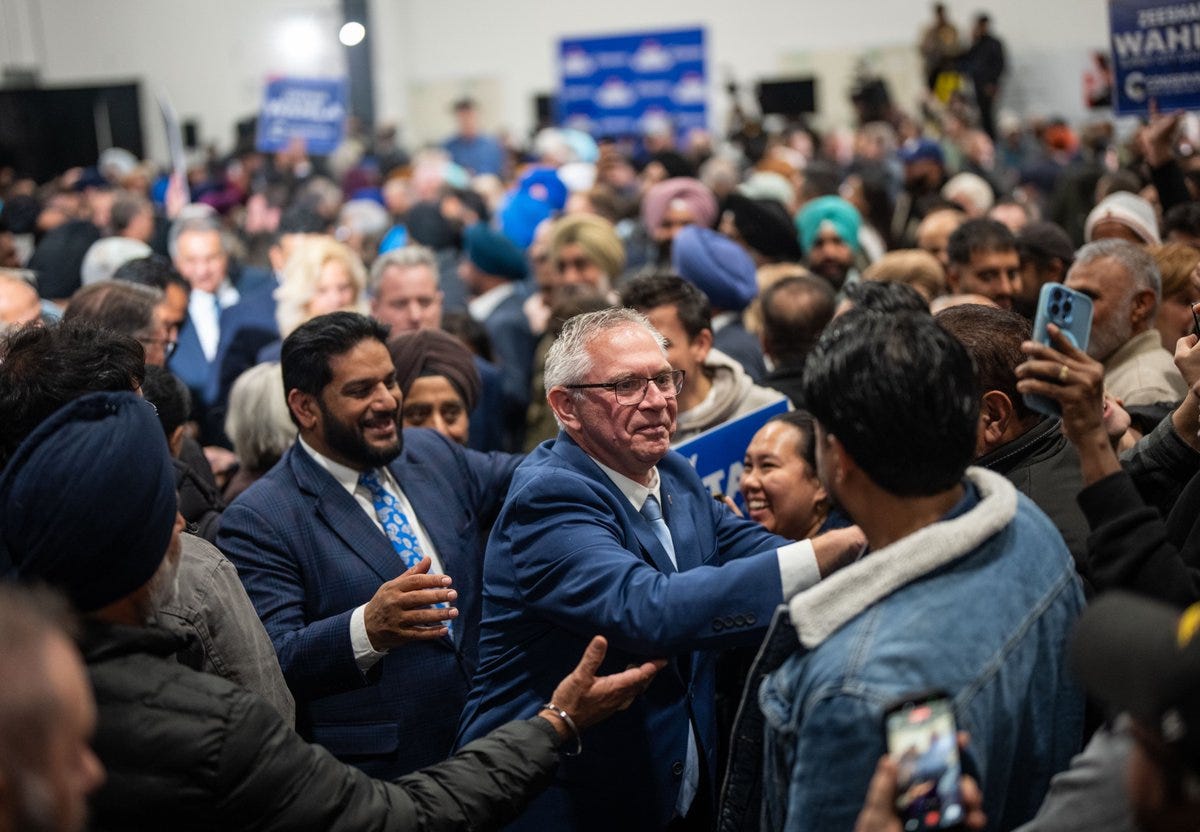
At the centre of it all was the accidental premier, as he came to be known, Lorne Doerkson — a virtual unknown to most of the electorate just five weeks ago.
The 58-year-old from Williams Lake never aspired to hold the province’s top office, instead settling for the role of assistant deputy speaker. But he was the consensus choice of a fractured Conservative caucus at a critical moment. On more than one occasion, Doerkson admitted publicly that the whole whirlwind election campaign built around him was just as much of an incredible surprise to him as it was to everyone else.
Nonetheless, he found his footing. The campaign kept Doerkson focused on bread-and-butter issues, like the economy, cost-of-living and health care. When the NDP unearthed offensive social media posts by two Conservative candidates (one of whom suggested Hitler was perhaps misunderstood), Doerkson fired them almost immediately, whereas previous Conservative leaders have hedged on giving ground to left-leaning outrage.
Election night saw a blue wave crest through the province.
The Conservatives already had a strong hold on the North, Interior and Fraser Valley, but managed to gain critical ground in the suburban communities of Coquitlam, Maple Ridge, Burnaby and Richmond. The party ran the slate on voter-rich Surrey, a key battleground, picking up all 10 ridings. And under Doerkson, the Conservatives pushed into new territory in the urban centres of Vancouver and Greater Victoria, upsetting the NDP in previously-safe ridings like Saanich South and Vancouver-Yaletown.
The B.C. NDP largely failed to get out its vote, haemorrhaging supporters. The party was also undercut by the B.C. Greens, which split the progressive vote. The Greens held their two ridings, while increasing their share of the popular vote as a kind of safe harbour for disaffected New Democrats.

The election proved consequential as a kind of referendum on new political parties that had popped up in the last two years due to floor crossings at the B.C. legislature.
OneBC leader Dallas Brodie, whose far-right agenda included attacking First Nations and proposing restrictions to abortion, had claimed to be representing a wide swath of British Columbians, despite being elected in 2024 as a B.C. Conservative on an entirely different slate of issues.
Voters rejected her party entirely. Brodie went from the incumbent in Vancouver-Quilchena to last place, with four per cent of the vote.
CentreBC, which had been designed as a moderate liberal alternative to the B.C. Conservatives under leader Elenore Sturko, also failed to elect any members.
In his first address as premier-elect on Sunday, Doerkson offered a conciliatory tone, thanking Eby for his public service and acknowledging that 37 per cent of voters still backed the NDP, even with its massive loss of seats.
“To the British Columbians who voted for another party yesterday, I heard you,” Doerkson said.
“Starting today, I am your premier as much as anyone else’s. You will have a government that listens to you, works for you, and respects you, however you marked your ballot.”
Eby’s epic blunder proved Doerkson’s stunning gain. Yet the new premier-elect, smartly, did not gloat upon it. Good idea: The results from voters speak more strongly than anything he could say.
Rob Shaw covers B.C. politics for CHEK News in Victoria, and is a contributor to Business in Vancouver. He hosts the daily podcast and weekly TV analysis show Political Capital.
rob@robshawnews.com
The Line is entirely reader and advertiser funded. No federal subsidies, no bailouts. If you value our work, please consider supporting us by subscribing or making a donation. Donations are not subscriptions and do not unlock paywalled content, but they help keep The Line independent

To contact The Line with a general inquiry or comment, please email info@readtheline.ca. For other ways to connect with us or to follow us on social media, please see our LinkTree.
This is a very good summary of the lead up to the election, the election itself, and the possibilities in the aftermath.
Great work, Rob Shaw.
As an observer from afar, who knows little about Alberta politics and even less about BC politics it seems like there's a bit of commonality with the referendum and the BC election: in both cases, the votes seem to have been called really for the benefit of the politicians. Not because anything made it necessary.
One of the big themes in politics these days is respect. Who is shown and not shown respect by elected officials. Well, the voters are busy people. Bothering them without good reason is not showing them respect, and they will punish you for it.