

By: Rob Shaw
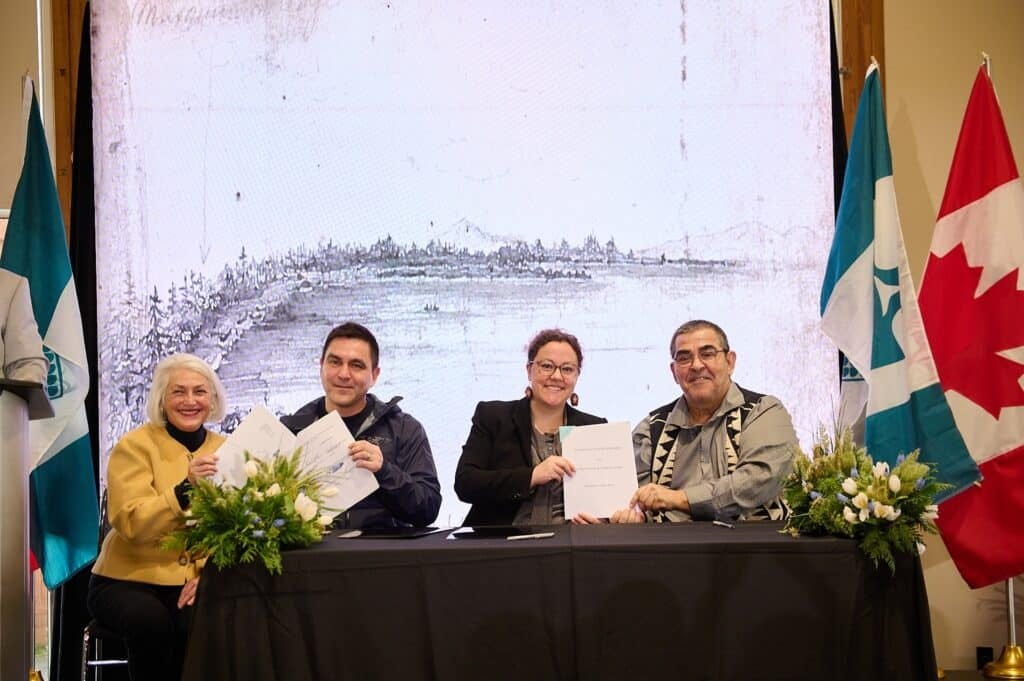
When the Musqueam Indian Band in Vancouver first started negotiating with Ottawa several years ago about recognizing Aboriginal title in its traditional territory across Metro Vancouver, almost nobody noticed.
When the agreement was finally announced last month, it landed in a political minefield.
In the span of the last six months, two court rulings have blown open the politics of Indigenous reconciliation in British Columbia, creating a landscape of fear, distrust and legal uncertainty into which the Musqueam deal landed.
The first came last August, when a B.C. Supreme Court decision involving the Cowichan Nation concluded that Aboriginal title can be a senior right to private property. The second arrived in December, when the B.C. Court of Appeal ruled the province’s Declaration on the Rights of Indigenous People Act (a landmark reconciliation law the NDP government enacted in 2019) could be used to invalidate other laws.
Both have left Premier David Eby’s government reeling.
Eby has promised to appeal the Cowichan decision to Canada’s highest court, backstop any private mortgages affected, amend DRIPA to snap back what he calls judicial overreach, and draw “bright lines” in the sand on B.C.’s reconciliation efforts amidst intense public and political blowback.
“To face such dramatic, overreaching and unhelpful court decisions as we have seen over the last couple of months, is deeply troubling,” Eby told a business audience in Vancouver in December.
“We will fix this because the uncertainty this case creates is toxic to the work we have to do with First Nations and businesses and the economy that we have to grow.”
It’s within that toxic stew that the Musqueam deal landed.
Technically, the agreement itself is modest. It does not transfer land. It does not change private property rights.
What it does do is formally recognize that the Musqueam has Aboriginal rights and title within its traditional territory (with a particular emphasis on coastal fisheries and marine management) and sets up negotiations on how those rights might be implemented in the future.
“The Incremental Recognition Agreement provides general recognition that Musqueam has Aboriginal rights and title within their territory and establishes a framework for ongoing discussions and future negotiations to define how and where those rights and title could apply,” the federal government said in its only statement on the issue.
Part of the public reaction stems from the territory involved. It’s a vast area where 1.3 million British Columbians live and work, spanning Vancouver, Burnaby, Richmond, North Vancouver, West Vancouver and parts of Delta.
That Ottawa believed an Aboriginal title agreement covering the most densely populated part of B.C. would be received without concern, shows how badly it has kept tabs on the changing mood of British Columbians.
But B.C.’s premier did not help matters either.
When first asked about the deal last week, he expressed frustration and surprise, saying he was not consulted and had no “line of sight” on what it meant. Not 12 hours later, photos surfaced showing Eby had attended the Feb. 20 ceremony between Musqueam and Ottawa, with a literal line of sight on the deal.
Eby doubled down, insisting his government had never been briefed by Ottawa. That explanation also lasted less than 12 hours, before the federal Crown-Indigenous Relations minister publicly confirmed B.C. officials had in fact been briefed weeks earlier.
Ottawa’s thoughtlessness and Eby’s incompetence served only to make a bad situation worse. The B.C. legislature was seized with the issue all week. On Parliament Hill, the federal Opposition Conservatives attacked the Mark Carney government over the terms of the deal and its secrecy.
Lost in all the noise was the actual text of the agreement.
But if you’re an ordinary voter trying to understand its implications — good luck. The best legal minds in the country are currently arguing about what this and other similar agreements actually mean. Their conclusions range from “not much at all” to “the beginning of the end of private property,” with varying shades of grey in between.
The controversy is not limited to traditional politics. Ottawa also failed to check with neighbouring First Nations whose territories overlap the Musqueam deal. Two nearby nations, the Squamish and Tsawwassen, said they were not consulted by the federal government, and both are now demanding answers into what it means for their members. This was remarkably sloppy, given that most of B.C.’s 204 First Nations have overlapping territorial claims, and when Ottawa recognizes one nation’s rights and title in territory also claimed by others, it risks igniting entirely new disputes.
Extreme elements of B.C.’s political scene have also capitalized on the issue, to whip up the gutter trolls of social media. B.C. MLA Dallas Brodie, whose OneBC party calls Indigenous reconciliation a scam, dispatched a staffer to record images of Vancouver Quadra MP Wade Grant’s office on Friday, where Grant displays a Musqueam flag alongside the B.C. and Canadian flags.
“You are trying to serve two masters,” Brodie wrote on social media. “You cannot advocate for the Musqueam Indian Band while representing Vancouver-Quadra. Resign immediately!”
Grant, a member of Musqueam, said his staff had been harassed. “Using intimidation tactics against staff and members of the public is unacceptable,” he posted. “I’m proud to be Canadian, British Columbian, and Musqueam, that’s why our office flies all three flags.”
The issue is, in short, a total mess.
The Musqueam agreement itself may not be the legal earthquake some fear. But the ground beneath British Columbia politics is already shaking. The province has entered a far more volatile phase of Aboriginal title debate. Ottawa’s failure to understand that shift has only made the political fallout worse.
Rob Shaw has spent more than 18 years covering B.C. politics. He now reports for CHEK News out of Victoria. He’s the host of the weekly podcast and YouTube show Political Capital, a weekly political correspondent for CBC Radio’s All Points West and Radio West programs, and a contributing columnist to Business in Vancouver and BC Business Magazine. You can reach him at rob@robshawnews.com.
The Line is entirely reader and advertiser funded — no federal subsidy for us! If you value our work, have already subscribed, and still worry about what will happen when the conventional media finishes collapsing, please make a donation today. Please note: a donation is not a subscription, and will not grant access to paywalled content. It’s just a way of thanking us for what we do. If you’re looking to subscribe and get full access, it’s that other blue button!

The Line is Canada’s last, best hope for irreverent commentary. We reject bullshit. We love lively writing. Please consider supporting us by subscribing. Please follow us on social media! Facebook x 2: On The Line Podcast here, and The Line Podcast here. Instagram. Also: TikTok. BlueSky. LinkedIn. Matt’s Twitter. The Line’s Twitter.Jen’s Twitter. Contact us by email: lineeditor@protonmail.com
Two really courageous articles from The Line in two days. Awesome stuff.
Wow do I love the courts forcing the legislature to grapple with the implications of the legislation they passed.
Anyone can read UNDRIP and DRIPA and realize that it’s maybe incompatible with modern industrial capitalism and the existence of modern Canada. But then the Eby and Trudeau governments assure that, no, it’s just a feel-good document to show that we care about Reconciliation. Your land title isn’t in jeopardy. Land Back is just a phrase, not a legal ask.
The courts are forcing everyone to clarify — is it actually just a symbol? Or are we talking revolutionary change, shattering the foundations of Canadian property law? (I know some of Eby’s advisors on record saying they want exactly that.)
In BC, 6% of the people claim well over 100% of the land. The federal and provincial governments think they can deal with this fundamental problem piecemeal.
They are mistaken.