

By: Scott Stinson
On the third weekend of March in 2012, the members of the federal NDP gathered to select a new leader.
Fourteen years later, everything, and nothing, has changed.
The party has gone from Official Opposition status in the heady days of the Orange Wave to a near electoral wipeout last year. The entire NDP caucus could share a lunch table at an Ottawa restaurant, and they wouldn’t even have to request a private room.
But just like when they were choosing a leader to replace Jack Layton after his tragic passing back then, party members must also wrestle with an existential question: do they want to embrace the ideology of the political left, and the NDP’s social-democratic roots, or do they want to be electoral pragmatists who influence government from within?
Given how well the latter has gone in recent years, party members could be forgiven for wanting to try the former.
I covered that NDP convention in 2012, where the narrative had been conveniently established by a party legend in the days preceding the Toronto gathering. The late Ed Broadbent had gone on the CBC to question the leftist — sorry, social democratic — credentials of Tom Mulcair, the Quebec MP and perceived front-runner.
Broadbent wondered if Mulcair was truly committed to addressing inequality first and foremost; the man had been a provincial Liberal, after all. Broadbent’s preferred candidate, Brian Topp, who had been Layton’s campaign director, was seen as more of an NDP true believer.
Mulcair won, only for the party to plummet to third place in the 2015 election, trounced by the arrival of Justin Trudeau to the leadership of the Liberals. From there, the party punted Mulcair and selected their own young, cool guy in Jagmeet Singh, but then saw him become the junior member in Trudeau’s don’t-call-it-a-coalition and effectively render the NDP irrelevant on the federal scene.
That last clause can be disputed: the NDP under Singh did force the Liberals into actual policy changes like public dental and pharmaceutical care, but Trudeau simply claimed credit for those things and voters didn’t appear to appreciate the nuance of the NDP’s role in their creation. Once the electorate decided it had seen quite enough of Trudeau, Singh became the guy who was propping up an unpopular PM. That way lies ruin.
Which brings us to today. The NDP leadership race that will culminate in Winnipeg this weekend has not exactly set the country alight. The contest to head a six-person caucus was always going to be a little underwhelming, but taking place as it does amid the chaotic thrashing of a world in Donald Trump’s throes pushes it even further to the side stage.
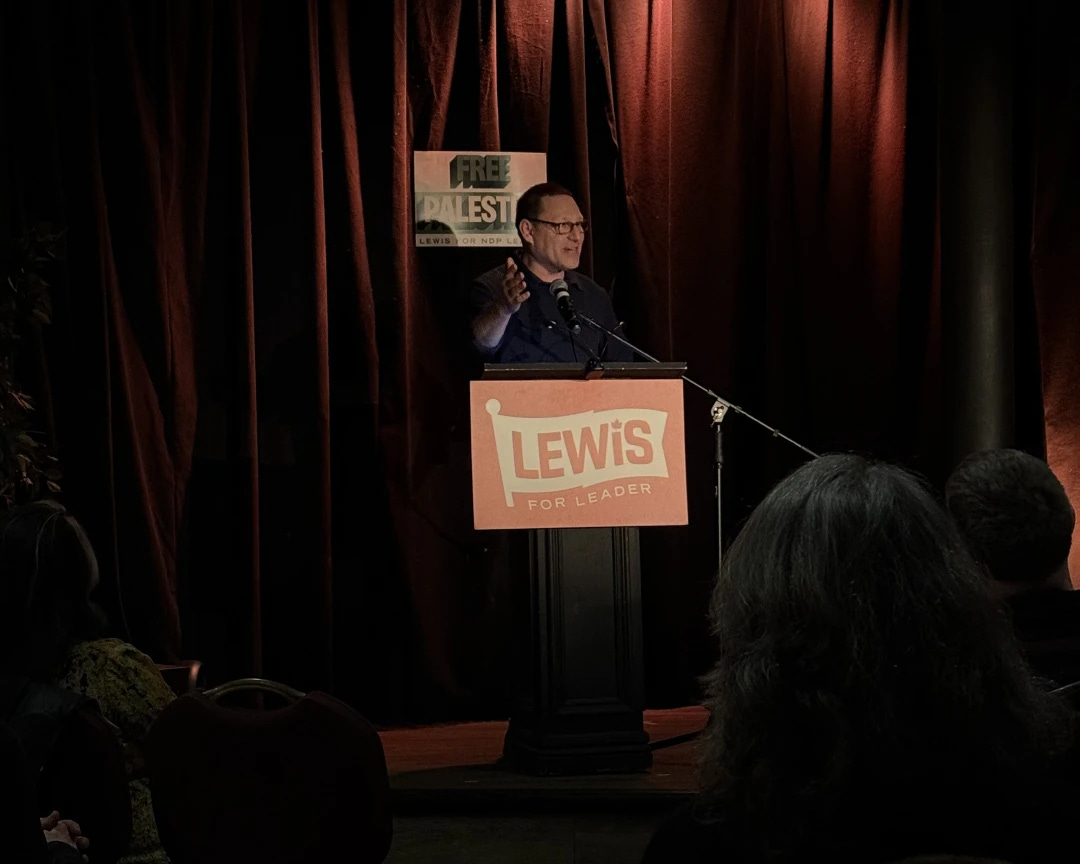
Still, the narrative has again been set. Barring a shocking result involving one of the lesser-known candidates, the choice will be between Avi Lewis, the party scion championing a leftward push, and Heather McPherson, the Edmonton MP who is considered the more pragmatic of the two.
Lewis’s policy proposals read like a progressive fever dream: a nationwide rent cap, public grocery stores and cellular providers, free public transit, heat pumps for all, even postal banking. None of this is particularly surprising for the guy who once co-authored the Leap Manifesto, a call-to-arms for the NDP that became a two-year subject of debate within the party and was eventually not adopted.
Lewis has also proven willing to adopt positions out of step with the mainstream, saying, for example, that he would reverse Liberal cuts to immigration levels, and calling the reduction of international-student permits part of an “anti-immigrant backlash.” (Polls have repeatedly shown in recent months that Canadians are concerned about immigration levels that the Liberals have themselves said were too high under their watch.) But that also might point to the kind of leadership that Lewis would provide: less concerned with reading the room, more willing to try to convince it of the righteousness of his cause.
Purely as a political observer, it would be fascinating to see how an NDP with these kinds of student-campus proposals would fare with a Canadian electorate that has vacillated between centrist and slightly-more-centrist for as long as I can remember. (It would also be fascinating to see how the party would make the math work.)
But there’s also an argument to be made that the NDP would be more effective by wholly embracing its place on the left of the political spectrum and trying to drag voters to them. With a Liberal central banker presently occupying the prime minister’s office, there should be plenty of room on that side of him. And it’s not like a focus on electability has produced the desired results. An Angus Reid survey released this week had one disastrous data point after another: past NDP voters didn’t know any of the leadership candidates (44 per cent) or consider the party irrelevant (48 per cent) or felt its best days are behind it (32 per cent). Again: among past NDP voters. In a word: Yikes.
Will the federal NDP, having not got very far with pragmatism, decide that radicalism is the way forward? We’ll find out on Sunday.
The Line is entirely reader and advertiser funded — no federal subsidy for us! If you value our work, have already subscribed, and still worry about what will happen when the conventional media finishes collapsing, please make a donation today. Please note: a donation is not a subscription, and will not grant access to paywalled content. It’s just a way of thanking us for what we do. If you’re looking to subscribe and get full access, it’s that other blue button!

The Line is Canada’s last, best hope for irreverent commentary. We reject bullshit. We love lively writing. Please consider supporting us by subscribing. Please follow us on social media! Facebook x 2: On The Line Podcast here, and The Line Podcast here. Instagram. Also: TikTok. BlueSky. LinkedIn. Matt’s Twitter. The Line’s Twitter.Jen’s Twitter. Contact us by email: lineeditor@protonmail.com
Totally irrelevant party with no future.
The purpose of the NDP is as a containment device for Liberal crazies. They all support the Liberals whenever needed, but in the meantime they are in a separate party, so the Liberals don't get blamed for their lunacy. Of course, Liberal "moderation" is only a matter of style, not actual government, so both sides get what they want: the crazies get ultra progressive government, and the Liberals get to be the ones delivering it.