


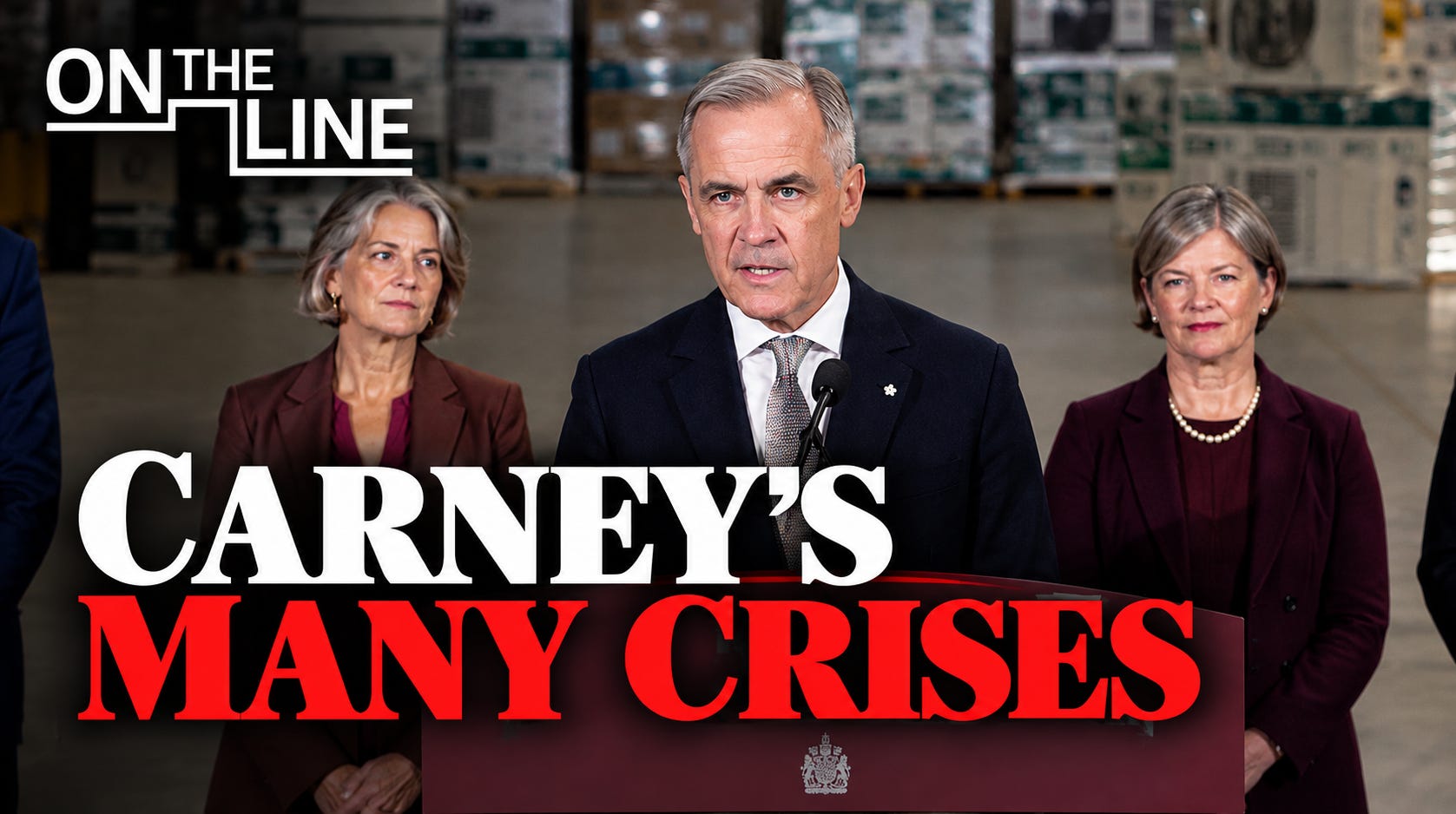
In today’s episode of On The Line, Gregory Jack, Senior Vice President of Public Affairs at Ipsos Canada, joins Matt Gurney to discuss the growing list of challenges facing Prime Minister Mark Carney — and, for a change, almost none of them have anything to do with Donald Trump or the United States.
This episode is brought to you by BioCanRx. We’ve been partnering with federally-funded Canadian not-for-profit BioCanRx to learn how made-in-Canada immunotherapies offer new ways to beat cancer. This month we’re addressing common questions, like: are there better ways to manufacture therapies?
A groundbreaking approach that streamlines new therapy production is “closed system manufacturing,” in which a product is made within a single, automated platform without exposing it to the surrounding environment. When properly implemented, this can reduce costs compared to manual production in a clean room and increase patient access –– while still meeting Health Canada’s safety and quality requirements. BioCanRx-funded researchers have already used closed system manufacturing to create therapies for more than 100 clinical trial patients. Last week, BioCanRx convened a meeting at Health Canada that brought together regulators, policymakers, industry and stakeholders to discuss regulatory alignments that could enable many more organizations to deploy these systems. They are now producing a report that will help Canadian decision-makers unlock the promise of advanced therapies for patients across Canada.
Thanks to BioCanRx for continuing to partner with The Line to share this information. Visit BioCanRx.com to learn more.
First up: problems in the provinces. Quebec has just elected a separatist government. Carney remains very popular in Quebec, considerably more popular than separation itself, but how will that relationship work? Matt and Greg discuss how Carney and Quebec’s incoming separatist premier might find ways to work together — and where the obvious political fault lines lie.
Meanwhile, the situation in Alberta is moving in the opposite direction, with support for separatism apparently falling rapidly and Danielle Smith facing political trouble of her own. Carney is popular there, too, giving him political capital to spend. But should he spend it? And if so, on what?
This episode is also brought to you by the Forest Products Association of Canada. Budget season in Ottawa is filled with asks for new programs, new tax measures and new investment. But for Canada’s forest products sector, the biggest opportunity for growth doesn’t require new spending — it requires smarter rules. Regulatory inefficiencies are costing the average Canadian mill an estimated one million dollars a year each. That’s money that could be reinvested in workers, communities, and modernization instead. The Forest Sector Transformation Task Force gave Ottawa a clear playbook. As the federal budget takes shape, the fastest way to unlock private investment is to remove the made-in-Canada barriers standing in the way. Learn more at FPAC.ca.
Matt and Greg then turn to the Carney government itself. A recent Globe and Mail article offered an interesting criticism of how the government is operating. Matt read it somewhat differently: as an essentially accurate description of what Carney is doing, but also of why the political and economic legacy left by Justin Trudeau may have given him little choice. Greg offers his take on what Carney is trying to accomplish and how well it is working.
Finally: healthcare. Matt and Greg have both written about it recently, and they’re struck by how Canada’s longest-running public-policy debate has somehow faded from political view. Canadians continue to tell pollsters that healthcare is one of their most important concerns. So why aren’t political leaders talking about it? Is there a plan — or have they simply given up?
This episode is also brought to you by Cameco. Building Canada’s energy future means creating jobs for Canadian workers. That’s why the AP1000 reactor is the right choice for Canada: it is already operating and ready to deliver the power we need. Choosing the AP1000 means a reactor built by Canadians, creating skilled jobs in construction, fabrication and the trades while keeping more investment and economic benefits here at home. If we are serious about creating Canadian jobs and strengthening our economy, the choice is clear. To learn more, visit ap1000.cameco.com.
Hope you liked the episode. Like and subscribe! And we hope you had a wonderful Thanksgiving.
YouTube:
Video goes live at 7 p.m Eastern/5 Mountain.
Spotify:
Apple:
Enjoy the episode! Talk to you soon.
The Line is entirely reader and advertiser funded. No federal subsidies, no bailouts. If you value our work, please consider supporting us by subscribing or making a donation. Donations are not subscriptions and do not unlock paywalled content, but they help keep The Line independent

To contact The Line with a general inquiry or comment, please email info@readtheline.ca. For other ways to connect with us or to follow us on social media, please see our LinkTree.


